
What to record when a crop moves from nursery to production
The handover from propagation is where batch history usually breaks. Five things to record when seedlings change zone, and why each one matters at harvest.
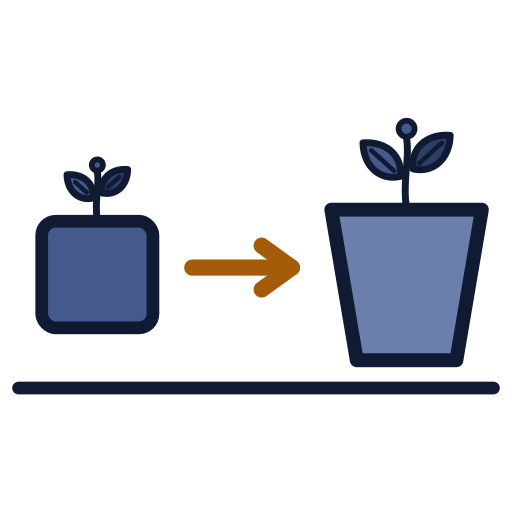
When a crop moves from nursery to production, record five things: the date it moved, who confirmed the move, how many days it spent in the nursery, how many seedlings went across, and how many did not. Those five turn two half-histories into one batch record. Without them, production starts its clock from zero, and every later figure about that batch, from forecast harvest date to yield per plant, rests on a crop that appears younger and bigger than it was.
Why the handover is where records go missing
Propagation and production are often run by different people, in different rooms, sometimes on different sheets. The nursery stops writing about a batch the moment it leaves, and the growing team starts writing about it when it lands. Whatever happened in between, a delay, a cull, a tray left on the bench over a weekend, belongs to nobody, so it is usually written down by nobody.
A nursery batch ends in a transfer, not a harvest
A propagation run produces plants, not produce. Its result is a count of seedlings handed on, not a weight. Close it as a harvest and two problems follow: the nursery looks like it yields kilograms, and the same plants are counted twice when production harvests them. Record the count that left, and keep weight for the crop that is sold.
Ready is not the same as moved
There are two moments, and they are worth keeping apart. The first is when the crop is ready to move: the recipe’s nursery stages are complete. The second is when someone actually moves it. The gap between them is real time in the nursery, with real light and heat, and if production is full it can run to days. Record both, and the gap tells you whether propagation or production capacity is the constraint.
Keep the crop’s age when it changes zone
A plant transplanted on day 14 is 14 days old on its first day in production. Any forecast that counts from the transplant date treats it as newly sown, so a harvest estimate built on crop age starts two weeks behind. The fix is simple: carry the nursery days across with the batch and count the crop’s age from sowing.
A short handover checklist
- The date and time the batch moved, and who confirmed it.
- The days spent in the nursery, from the start of the nursery run to the move.
- The number of seedlings sent across, as a count.
- The number left behind or discarded, and why.
- The zone it left and the zone it went to.
How BeeGrow AI handles the move
In BeeGrow AI a cultivation plan can run in a nursery zone first and a main growing zone after, with the transplant point set as a stage in the plan. When the plan’s nursery stages are complete, BeeGrow marks it ready to transplant, stops automation in the nursery zone, and holds the plan until a person confirms the move. Confirming records when it happened, who confirmed it and how many days the crop spent in the nursery. BeeGrow refuses the confirmation if the main zone already has an active plan, so two batches cannot claim the same space. BeeGrow does not see that the plants are ready. The ready flag comes from the recipe’s stages, and a person decides.
Where propagation runs as its own plan, a nursery recipe closes as a transfer recorded as a seedling count, never as a harvest weight. For the production plan that follows, harvest forecasts add the nursery days back, so crop age counts from sowing. More detail is on the propagation and crop management pages, and on how forecasts are built on the forecasting page.
See BeeGrow AI on your own crop plan
A 30-minute walkthrough against your zones, crops and sensors. No slides unless you ask for them.
- Walkthrough led by someone who has built the system
- We map your zones, crops and sensors before the call
- Straight answers on what fits and what does not